


Is Non-Alcoholic Beer Halal? Beer, Wine and Spirits Explained

Marc Bennett
Non-Alcoholic Beverage Reviewer
Is non-alcoholic beer halal? There is no single answer, and anyone who tells you otherwise is skipping the part that matters. Most non-alcoholic beer is brewed exactly like regular beer, fermented with yeast, and then has its alcohol removed down to less than 0.5% or, for 0.0% beers, to a trace. Some Islamic scholars and halal certifiers say a drink made through the same process as beer is not permissible however little alcohol is left. Others say a drink that cannot intoxicate in any quantity, with less alcohol than some fruit juices, is permissible. None of the non-alcoholic beers we carry lists a halal certification. If you want certainty, choose a drink that is certified halal or was never fermented, and ask a scholar you trust about the rest.
Below we explain how non-alcoholic drinks are made, why opinions differ, what a halal label means in Canada, and what we carry in non-alcoholic beer, wine and spirits, including the drinks that are certified halal or made without any fermentation.

Quick Answer: Non-Alcoholic Drinks and Halal
| Type of drink | Fermented? | Halal status |
|---|---|---|
| Non-alcoholic beer (0.5% or 0.0%) | Yes, then the alcohol is removed or limited | Scholars differ; none we carry is certified |
| Dealcoholized wine | Yes, then the alcohol is removed | Scholars differ; a few are certified |
| Wine alternatives made without fermentation | No | No alcohol at any stage; check for certification |
| Non-alcoholic spirits made from water and botanicals | No | Some are certified halal |
How Non-Alcoholic Beer Is Made
Beer is made by steeping malted grain in hot water, boiling it with hops and then adding yeast. The yeast turns the sugars into alcohol and carbon dioxide. To make non-alcoholic beer, brewers either remove the alcohol from a finished beer (with low-temperature vacuum distillation or a membrane) or stop the yeast before it produces much alcohol. Corona Cero, for example, is described as Corona Extra with the alcohol removed. Our article on how non-alcoholic beer is made goes through each method in detail.
The result is a drink that tastes like beer and contains very little alcohol. In Canada, most non-alcoholic beers are labelled less than 0.5%, and beers labelled 0.0% have had the alcohol reduced to a trace. For comparison, ripe fruit, fruit juice and fresh bread can also contain small natural traces of alcohol from fermentation.
Why Scholars Disagree
The starting point is the same for everyone: Islam forbids khamr, intoxicating drink, and a well-known hadith says that whatever intoxicates in a large amount is forbidden in a small amount too. The disagreement is about how that applies to a drink that cannot intoxicate at all.
View 1: The Process Matters
Many scholars and certifiers look at how the drink was made. If it was produced as beer or wine, through the same fermentation used to make khamr, it stays impermissible even after the alcohol is removed. Malaysia’s National Fatwa Council, whose rulings guide the JAKIM halal standard, takes this position: drinks made in the same way as alcoholic drinks are not permitted, whether the alcohol is high, low or removed. Some also point to the concern of imitating drinking culture, since non-alcoholic beer is designed to look and taste like the real thing.
View 2: The Final Drink Matters
Other scholars look at the finished drink. If it cannot intoxicate in any quantity, and its trace of alcohol is no higher than what occurs naturally in juice or bread, they consider it permissible. Under this view, a 0.0% beer is judged like any other soft drink. Even scholars who hold it often advise caution with drinks that are marketed as beer.
Both views are held by serious people. This article does not issue a ruling: if the question matters to you, ask an imam or scholar you trust, and tell them how the specific drink is made.
What a Halal Label Means in Canada
Halal is not a government certification in Canada. Products are certified by independent halal bodies, each with its own standard, and the Canadian Food Inspection Agency requires a halal claim on a label to name the organization that certified it. That makes the label the most reliable shortcut: look for the halal mark and the certifier’s name, and if you follow a particular certifier, check that it is theirs. Alcohol content alone does not tell you whether a drink is halal, since a 0.0% beer and a 0.0% juice-based drink can be treated very differently.
Non-Alcoholic Beer
We could not find a non-alcoholic beer with a halal certification among the beers we stock. If you and your scholar are comfortable with the second view, our 0.0% beers are the closest to zero we carry. All of them are brewed. The full range is in our non-alcoholic beer collection, where the alcohol content is listed on every product page.
Corona Cero 0.0%

Price: $3.29 / 355 mL can / Buy Now
Corona Extra with the alcohol removed, blended with natural flavours and vitamin D. Labelled 0.0%, 60 calories per can. No halal certification is listed.
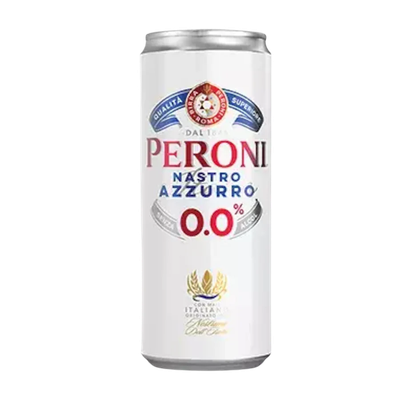
Peroni Nastro Azzurro 0.0%

Price: $2.79 / 330 mL can / Buy Now
An Italian pilsner brewed with barley malt, Italian maize and hops. Labelled 0.0%, 80 calories per can. No halal certification is listed.
Budweiser Zero

Price: $3.29 / 355 mL can / Buy Now
Brewed with rice, hops and barley. Labelled 0.0%, 50 calories and no sugar per can. No halal certification is listed.
Michelob Ultra Zero

Price: $3.29 / 355 mL can / Buy Now
A light lager with a hint of citrus and a crisp finish. Labelled 0.0%, 30 calories and no sugar per can. No halal certification is listed.
Non-Alcoholic Wine
Non-alcoholic wine comes in two kinds. Dealcoholized wine is made as real wine and then has its alcohol removed, so the same disagreement as for beer applies, unless the bottle carries a halal certification. Wine alternatives are never fermented at all, so they never contained alcohol. Our guide to dealcoholized wine explains the difference.
French Bloom Le Rosé

Price: $59.99 / 750 mL / Buy Now
A sparkling rosé from the south of France that the producer describes as organic and halal certified. Read the ingredients so you know exactly what is inside: alongside spring water, organic grape juice and lemon juice, it contains dealcoholized organic fermented grape juice. In other words, part of the blend was fermented and then had its alcohol removed, and the certifier still approved it. It is labelled 0.0%, has 20 calories per 100 mL and also comes in a 375 mL half bottle at $31.99.
- Halal certified: according to the producer.
- 0.0% alcohol: and 20 calories per 100 mL.
- Two sizes: 750 mL and 375 mL.
Le Petit Béret Nouveau Rosé

Price: $17.99 / 750 mL / Buy Now
Le Petit Béret takes a different route: its wines are never fermented at all. The base is an infusion of grape seeds in water, blended with grape juice and natural flavourings, so there was never any alcohol to remove. The product listing does not mention a halal certification, so treat it as a never-fermented option rather than a certified one. The rosé shows red berry notes, has 20 calories per 100 mL and is labelled 0.0%.
- No fermentation: grape seed infusion and grape juice.
- Under $18: for a 750 mL bottle.
- 0.0% alcohol: on the label.
Le Petit Béret Sparkling Le Blanc

Price: $21.99 / 750 mL / Buy Now
The sparkling white from the same producer, made the same way with no fermentation. It is dry, with fine bubbles and floral notes, and sits at 16 calories per 100 mL. Like the rosé, no halal certification is listed, but it is a good fit for a toast at a wedding or Eid gathering where you want something that looks festive and was never alcoholic.
- No fermentation: from start to finish.
- Dry and sparkling: for a toast.
- 16 calories: per 100 mL.
Non-Alcoholic Spirits
Most non-alcoholic spirits are not made from wine or beer. Many are built from water and botanical extracts, with no fermentation or distillation of alcohol, and some brands have them certified halal.
USKO Nordic Berries

Price: $39.99 / 700 mL / Buy Now
USKO is one of the few brands on our shelves that states a halal certification on the product itself: the description lists it as certified halal, vegan and gluten-free. It is not a dealcoholized spirit. The base is spring water and vegetable glycerine with herbs, spices and botanical extracts, so nothing is fermented or distilled along the way. The Nordic Berries version is tart and berry-forward, built to mix the way you would use a vodka. 10 calories per 44 mL serving.
- Certified halal: as stated by the brand.
- Never fermented: water, glycerine and botanicals.
- 10 calories: per 44 mL serving.
USKO Citrus

Price: $39.99 / 700 mL / Buy Now
Same base and the same certified halal, vegan and gluten-free listing as the Nordic Berries, with Sicilian lemon, Tahitian lime and cucumber in the flavourings. It is the one to reach for in a long drink with soda or tonic. USKO also makes a Vanilla version, which the brand describes as halal compliant rather than certified.
- Certified halal: as stated by the brand.
- Lemon, lime and cucumber: made for highballs.
- 0.0% alcohol: on the label.
How to Choose
- Look for a named certifier: in Canada, a halal claim has to say who certified it.
- Read the first ingredients: “dealcoholized” or “fermented” means alcohol was made and then removed; water, juice or botanicals first usually means it never was.
- Check the number: “less than 0.5%” and “0.0%” are different; every product page on our site lists the alcohol content.
- Ask about the specific drink: when you ask a scholar, describe how it is made as well as the alcohol percentage.
FAQ
Is 0.0% beer halal?
Opinions differ. A 0.0% beer contains only a trace of alcohol, but it is still brewed and fermented like beer. Scholars who judge by the process consider it impermissible; scholars who judge by the final drink may consider it permissible. None of the 0.0% beers we carry is halal certified.
Is Heineken 0.0 halal?
Heineken 0.0 is brewed with malt, wheat, hops and yeast, and its product information on our site does not list a halal certification. Whether it is acceptable depends on which scholarly view you follow.
Is non-alcoholic wine halal?
Dealcoholized wine is fermented and then has its alcohol removed, so the same disagreement applies. A few, like French Bloom Le Rosé, are described by their producer as halal certified. Wine alternatives that are never fermented, such as Le Petit Béret, never contained alcohol. Our guide to dealcoholized wine explains the difference.
Does non-alcoholic beer have alcohol in it?
Usually a little. Most non-alcoholic beers sold in Canada contain less than 0.5% alcohol, and 0.0% beers contain only a trace. It is not enough to cause intoxication, but it is not always zero.
What can I drink instead of non-alcoholic beer?
Halal-certified non-alcoholic spirits like USKO, never-fermented sparkling drinks like Le Petit Béret, and our mocktails and non-alcoholic cocktails. Our ginger beers are soft drinks rather than beer, despite the name.
Shop Non-Alcoholic Drinks at Upside Drinks
Every drink above is in stock and ships across Canada. Browse our non-alcoholic spirits, sparkling wines and non-alcoholic beers, or read our guides to the best non-alcoholic vodka and whether non-alcoholic beer is healthy.
Discover our Shop with
1000+ alcohol-free options
From sparkling wines to craft beers and botanical spirits, there's something for everyone.
BROWSE THE STORE
You May Also Like
 guidesWhat Is Dealcoholized Wine? How It Is Made and What the Labels Mean
 guidesDry January Guide (2027): How to Plan It and What to Drink Instead