


What Is Dealcoholized Wine? How It Is Made and What the Labels Mean

Sophie Grant
Non-Alcoholic Wine & Ready-to-Drink Expert
What is dealcoholized wine? It is real wine, made from grapes and fully fermented like any bottle of red, white, rosé or sparkling, that has had its alcohol removed afterwards. Most dealcoholized wines end up with less than 0.5% alcohol, and some are labelled 0.0%. That is what separates them from grape juice, which never ferments, and from wine alternatives, which are built from juice, tea or botanicals without ever being wine.
Below we explain the three main ways producers take the alcohol out (vacuum distillation, spinning cone and reverse osmosis), what the words on a Canadian label mean, how dealcoholized wine compares with regular wine, how to serve it, and a short list of dealcoholized wines from our non-alcoholic wine collection.

Quick Answer: How Alcohol Is Removed From Wine
| Method | How it works | Heat |
|---|---|---|
| Vacuum distillation | The wine is heated under a vacuum, which lowers the boiling point so the alcohol evaporates at a low temperature | Low (roughly 25 to 35°C) |
| Spinning cone column | The wine runs down a column of spinning cones as a thin film; a first pass captures the aromas, a second removes the alcohol, then the aromas go back in | Low, under vacuum |
| Reverse osmosis | The wine is pushed through a very fine membrane that lets water and alcohol through; the alcohol is separated out and the water is returned | None (cold filtration) |
Step 1: It Starts as Regular Wine
Every dealcoholized wine begins in a vineyard and a cellar. Grapes are picked, crushed or pressed, and the juice is fermented: yeast eats the grape sugar and turns it into alcohol and carbon dioxide. Reds ferment with their skins for colour and tannin, whites and rosés mostly without. Some wines are then aged in tanks or barrels.
Only once the wine is finished does the producer remove the alcohol. Because the wine went through a full fermentation, it keeps the acidity, tannin and fermented flavours that grape juice does not have. Our article on why non-alcoholic wine is the hardest one to get right goes deeper into what is lost along the way.
Method 1: Vacuum Distillation
Alcohol boils at a lower temperature than water, and under a vacuum the boiling point drops further still. That lets producers evaporate the alcohol at a gentle temperature, roughly 25 to 35°C, instead of cooking the wine at 78°C or more. Lower heat matters because the aromas in wine are fragile and change quickly when heated.
Some aroma still leaves with the alcohol, so many producers collect it and blend it back in. Noughty Chardonnay, a Chenin Blanc and Chardonnay blend from South Africa, is one example: the producer says it uses a vacuum dealcoholization process at low temperatures.
Method 2: Spinning Cone Column
A spinning cone column is a form of vacuum distillation built for wine. Inside a tall steel column, cones fixed to the wall alternate with cones mounted on a spinning shaft. The wine flows down over the cones as a very thin film while steam rises through it under vacuum. The first, cooler pass lifts off the most delicate aromas, which are kept aside. A second pass removes the alcohol. The aromas are then added back to the dealcoholized wine.
Because it works quickly and at low temperature, the spinning cone is used by many well-known non-alcoholic wine producers. On our shelves, Giesen Sauvignon Blanc, Brut Dargent Sparkling Chardonnay and Bon Voyage Merlot all say they are made this way.
Method 3: Reverse Osmosis
Reverse osmosis uses pressure instead of heat. The wine is pumped against a membrane with pores so small that only water and alcohol can pass. What stays behind is a concentrate that holds the colour, acids, tannins and most of the flavour. The alcohol is then separated from the water (usually by a small distillation), and the water goes back into the concentrate to rebuild the wine.
Since the wine is never heated, producers like reverse osmosis for keeping the original character. It is slower and more expensive to run, and it is also used in regular winemaking to fine-tune alcohol levels. None of the wines we carry names it on its label, so we do not single one out here.
Dealcoholized vs Alcohol-Free vs Non-Alcoholic: Labels in Canada
In Canada, these words are not quite interchangeable. The Canadian Food Inspection Agency’s labelling guidance says “dealcoholized” means the alcohol has been reduced to less than 1.1%, while “non-alcoholic” and “alcohol-free” are meant for products with less than 0.05%. In practice, the non-alcoholic wines sold in Canada, including every wine on this list, show less than 0.5% alcohol, the benchmark used for non-alcoholic drinks in the U.S. and the European Union, and Canadian industry groups have asked the CFIA to adopt that same 0.5% line.
The simplest way to know what you are drinking is to read the number on the bottle: most say “less than 0.5%”, and a few say 0.0%. On our site, the alcohol content is also listed on every product page.
| Label | What it means |
|---|---|
| Dealcoholized (or de-alcoholised) | Made as regular wine, then the alcohol is removed. The CFIA threshold is under 1.1%; the dealcoholized wines we carry are all under 0.5%. |
| Non-alcoholic | Under CFIA guidance, less than 0.05%. In stores and online in Canada, the term is widely used for drinks under 0.5%. |
| Alcohol-free or 0.0% | The strictest claim. A bottle labelled 0.0% contains less than 0.05% alcohol. |
| Wine alternative | Not made from wine at all: built from grape juice, tea, spices or botanicals, often 0.0%. |
Dealcoholized Wine vs Wine Alternatives
Read the ingredient list. A dealcoholized wine lists “dealcoholized wine” (or “de-alcoholised wine”) first. A wine alternative does not. NOA Dry Sparkling Wine from Québec is a good example: the producer says it was built up from Chardonnay grape juice instead of dealcoholizing an alcoholic wine. Neither approach is better; they are just different drinks. You can browse the alternatives in our non-alcoholic wine alternatives collection.
How Does Dealcoholized Wine Taste Compared With Regular Wine?
Alcohol does more in wine than most people realize. It adds body and a sense of warmth, it softens acidity and tannin, and it helps carry aroma from the glass to your nose. Take it out and a wine usually feels lighter, and its acidity and tannin stand out more.
Producers make up for this in a few ways, and you can see them on the labels. Many add back grape juice, grape juice concentrate or rectified grape must for sweetness and roundness, gum arabic for texture, or tannins for structure, and sparkling wines get carbon dioxide for bubbles. That is also why sugar varies so much: on the list below it runs from 3.2 g to 7.3 g per 100 mL.
Calories drop a lot. Alcohol carries about 7 calories per gram, so a regular wine at 12 to 13% has roughly 80 calories per 100 mL. The dealcoholized wines below with label data have 19 to 33 calories per 100 mL. As a general rule, aromatic whites, rosés and sparkling wines tend to come closest to the original, while big, tannic reds are the hardest to get right.
How to Serve Dealcoholized Wine
- Serve it a little colder: whites, rosés and sparkling wines at 6 to 10°C, and reds lightly chilled, around 12 to 14°C, which keeps them fresh.
- Use regular wine glasses: a tulip or white wine glass helps gather aroma, and a flute keeps bubbles longer.
- Pair it like wine: reds with grilled meat and pasta, whites with seafood and poultry, sparkling with salty snacks and oysters. Each product page lists the producer’s pairings.
- Finish the bottle within a few days: without alcohol to protect it, an opened bottle should go back in the fridge with a stopper. Sparkling loses its bubbles fastest, so single-serve 200 mL and 250 mL formats are handy.
- Cook and mix with it: dealcoholized red works in sangria or a non-alcoholic mulled wine.
Dealcoholized Wines to Try
Here are eight dealcoholized wines from our shelves, two per style. We ranked the ones in stock by our sales over the last 90 days and kept the top sellers, then gave two spots to wines whose producers name their method (Giesen and Brut Dargent). We only name a method when the producer states it.
| Wine | Type | Price | Method |
|---|---|---|---|
| JP. Chenet Cabernet Sauvignon / Syrah | Red | $9.74 / 750 mL | Not stated |
| Loxton Cabernet Sauvignon | Red | $11.99 / 750 mL | Not stated |
| Loxton Sauvignon Blanc | White | $11.99 / 750 mL | Not stated |
| Giesen Sauvignon Blanc | White | $19.99 / 750 mL | Spinning cone |
| Smoky Bay 0.0% Rosé | Rosé | $12.99 / 750 mL | Not stated |
| Loxton Moscato Rosé | Rosé | $11.99 / 750 mL | Not stated |
| Oddbird Blanc de Blancs | Sparkling | $27.99 / 750 mL | Not stated |
| Brut Dargent Sparkling Chardonnay (200 mL) | Sparkling | $6.99 / 200 mL | Vacuum distillation, spinning cone |
1. JP. Chenet Cabernet Sauvignon / Syrah

Price: $9.74 / 750 mL / Buy Now
Our best-selling non-alcoholic wine over the last 90 days, and the least expensive full bottle on this list. It is a dry, medium-bodied red from the Languedoc in southern France. The ingredient list shows dealcoholised red wine with rectified grape must concentrate added back, a common way to give back some of the roundness that alcohol used to provide. The producer suggests it with grilled chicken or pork chops.
Things We Like
- Best seller: our number one non-alcoholic wine by sales.
- Under $10: for a full 750 mL bottle.
- 25 calories: per 100 mL.
2. Loxton Cabernet Sauvignon

Price: $11.99 / 750 mL / Buy Now
Our second best-selling wine, from Australia. The ingredient list is about as short as it gets: dealcoholized wine made from Cabernet Sauvignon grapes, plus sulfites. Loxton lists red fruits and vanilla as the main notes and pairs it with meat and pasta dishes. 30 calories and 4.7 g of sugar per 100 mL.
Things We Like
- Short ingredient list: dealcoholized Cabernet Sauvignon and sulfites.
- Made for dinner: with meat and pasta.
- Case of 6: at $71.94.
3. Loxton Sauvignon Blanc

Price: $11.99 / 750 mL / Buy Now
Our best-selling white. Like the Loxton red, it is simply dealcoholized wine made from Sauvignon Blanc grapes. The listed notes are citrus, green apple and herbaceous, the classic Sauvignon Blanc profile, and Loxton suggests poultry, seafood and Asian dishes. 23 calories and 4 g of sugar per 100 mL.
Things We Like
- Best-selling white: on our site.
- Classic Sauvignon Blanc notes: citrus and green apple.
- 23 calories: per 100 mL.
4. Giesen Sauvignon Blanc

Price: $19.99 / 750 mL / Buy Now
One of the few producers on our shelves that names its method: Giesen removes the alcohol with a spinning cone column (the brand calls it a spinning column technique). The wine is 100% Sauvignon Blanc from New Zealand, and the finished bottle is 94% dealcoholized wine and 6% grape juice. Giesen lists tropical fruit, black currant and passion fruit, and suggests seafood, salmon and chicken.
Things We Like
- Method: spinning cone column.
- 19 calories: per 100 mL, the lowest of our picks with label data.
- New Zealand Sauvignon Blanc: 100% of the grapes.
5. Smoky Bay 0.0% Rosé

Price: $12.99 / 750 mL / Buy Now
Our best-selling still rosé, from Merbein in Australia, and one of the few wines here labelled 0.0% alcohol rather than under 0.5%. Grape juice concentrate and gum arabic are on the ingredient list, two additions that bring back sweetness and texture after the alcohol is gone. The listed notes are strawberry and cherry. 24 calories and 4.3 g of sugar per 100 mL.
Things We Like
- 0.0% alcohol: on the label.
- Best-selling rosé: on our site.
- Pairs with appetizers: poultry and pasta in white sauce.
6. Loxton Moscato Rosé

Price: $11.99 / 750 mL / Buy Now
Our second best-selling still rosé, and the sweetest wine on this list at 7.3 g of sugar per 100 mL (33 calories). Moscato is an aromatic grape, and Loxton lists apples, peaches, passion fruit and citrus. The only ingredient named is dealcoholized wine. A good pick for anyone who finds dry non-alcoholic wines too sharp.
Things We Like
- Sweeter style: 7.3 g of sugar per 100 mL.
- Aromatic grape: Moscato.
- Pairs with Asian dishes: and lighter fare.
7. Oddbird Blanc de Blancs

Price: $27.99 / 750 mL / Buy Now
Our best-selling dealcoholized sparkling wine. It is made from ripe Chardonnay grapes in the Blanc de Blancs style of Champagne, and the ingredients are dealcoholized wine, sugar and carbon dioxide, which tells you the bubbles are added after the alcohol comes out. Oddbird lists green apple and lime and suggests spicy dishes such as Asian and Indian food. 20 calories and 5 g of sugar per 100 mL.
Things We Like
- Chardonnay only: in the Blanc de Blancs style.
- Best-selling dealcoholized bubbly: on our site.
- 20 calories: per 100 mL.
8. Brut Dargent Sparkling Chardonnay (200 mL)

Price: $6.99 / 200 mL / Buy Now
A French sparkling Chardonnay in a single-serve 200 mL bottle, and the clearest example of a stated method on our shelves: Brut Dargent says the wine is dealcoholised by vacuum distillation in a spinning cone column, to keep the fresh, fruity character of the grape. The producer suggests oysters, sushi, soft cheeses or a light salad.
Things We Like
- Method: vacuum distillation in a spinning cone column.
- Single serve: one 200 mL bottle, no leftovers.
- Packs of 6 and 24: at $39.99 and $158.99.
How to Choose a Dealcoholized Wine
- Check the alcohol number: if you need a strict 0.0%, look for it on the label or product page; most dealcoholized wines are under 0.5%.
- Look at the first ingredient: “dealcoholized wine” means it started as wine; grape juice or tea first means a wine alternative.
- Watch the sugar: under 4 g per 100 mL reads dry; Moscato and sweeter rosés sit higher.
- Start with whites, rosés or bubbles: if you are new to non-alcoholic wine, these styles usually feel closest to what you know.
- Try a small format first: 200 mL and 250 mL bottles and cans let you test a style before buying a full bottle.
Shop Dealcoholized Wine at Upside Drinks
Every wine above is in stock and ships across Canada. Browse our non-alcoholic red wines, white wines, rosé wines and sparkling wines, or see our guides to the best non-alcoholic wines, the best non-alcoholic red wines, the best non-alcoholic white wines, the best non-alcoholic rosé wines and the best non-alcoholic champagnes. Curious about beer too? Here is how non-alcoholic beer is made.
FAQ
What does dealcoholized wine mean?
It is wine that was made the normal way, from fermented grapes, and then had the alcohol removed, usually by vacuum distillation, a spinning cone column or reverse osmosis. Most dealcoholized wines contain less than 0.5% alcohol.
Is dealcoholized wine completely alcohol-free?
Not always. Most contain a trace, under 0.5%. Wines labelled 0.0%, like Smoky Bay 0.0% Rosé, contain less than 0.05%. Check the number on the label if you need to avoid alcohol completely.
Is dealcoholized wine just grape juice?
No. Grape juice is never fermented. Dealcoholized wine goes through a full fermentation first, which gives it the acidity, tannin and wine flavours that juice does not have. Some producers do add a little grape juice back after removing the alcohol, for balance.
Does dealcoholized wine have fewer calories?
Yes. A regular wine has roughly 80 calories per 100 mL, mostly from alcohol. The dealcoholized wines on this list with label data have 19 to 33 calories per 100 mL.
Which method makes the best dealcoholized wine?
None wins every time. Spinning cone and reverse osmosis are often described as the gentlest on aroma, but the quality of the base wine and how the producer rebalances it matter more than the technique.
How long does dealcoholized wine last once opened?
Keep it in the fridge with a stopper and finish it within a few days. Without alcohol it is more fragile than regular wine, and sparkling wine loses its bubbles faster.
Discover our Shop with
1000+ alcohol-free options
From sparkling wines to craft beers and botanical spirits, there's something for everyone.
BROWSE THE STORE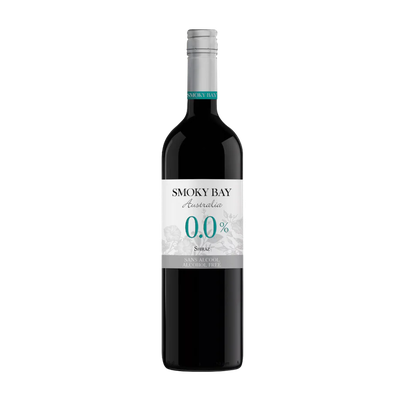
You May Also Like
 guidesDry January Guide (2027): How to Plan It and What to Drink Instead